
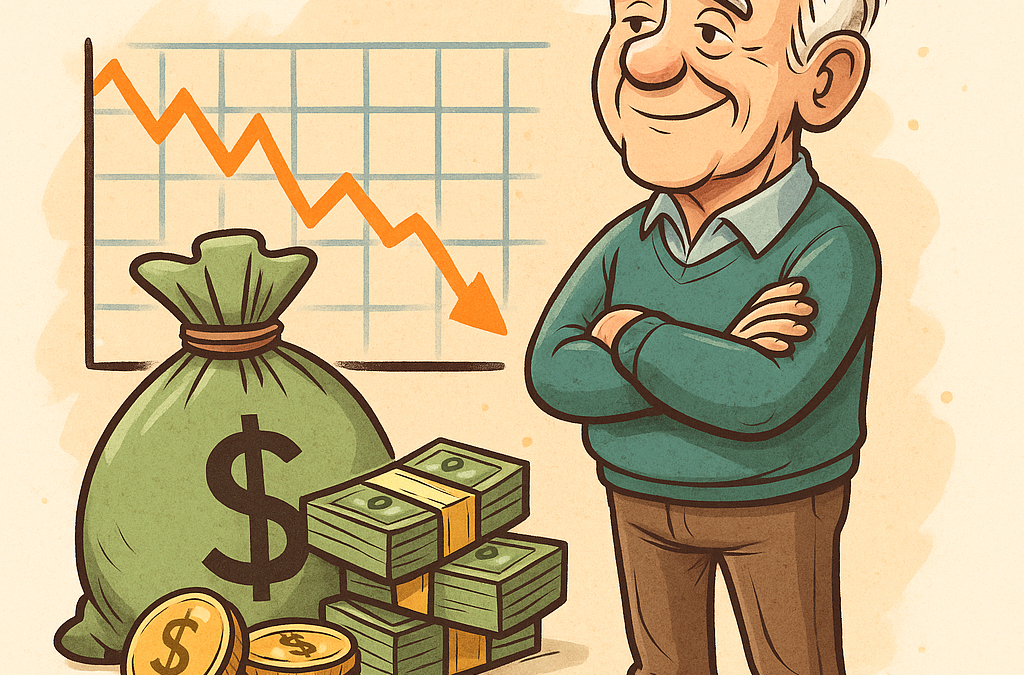
About five years ago, I was at a community meeting when an older friend — a man I’ve respected all my life — unexpectedly opened up to me about his finances. It caught me off guard, because where I come from, Afrikaans men don’t easily admit their struggles, let alone financial ones.
But there I was, listening as he explained, with quiet defeat in his voice, how the system had failed him miserably.
By every rule in the book, he’d done everything right. He worked hard on his farm for decades. He diligently saved a percentage of his income every month. He put money into retirement products that were sold to him with the promise of security and comfort in his later years. And when he had a few exceptional years on the farm, he didn’t squander that extra cash — he invested it in a rental property, hoping it would give him reliable passive income.
On paper, he was a poster child for financial responsibility.
Yet now, standing on the edge of retirement, the truth hit him like a brick wall: his so-called “retirement savings” were barely more than what he had paid in himself. There was no meaningful interest earned, no compound effect — just hollow promises and hidden fees.
I thought: At least he has the rental property. But digging deeper, I realised it was more headache than help. It was too far away for him to manage properly, so repairs were neglected and tenants came and went with little oversight. Instead of providing extra income, it drained time, energy and money.
And so, after a lifetime of “doing things right”, he faced the ugly truth: he couldn’t afford to retire.
Sadly, his story is not unique. Since that day, I’ve heard version after version from honest, hardworking people who put their faith in the same system — only to realise, too late, that it was never designed to make them truly wealthy.
So Why Does Traditional Finance Fail So Many?
Here are a few brutal truths:
🔑 1️⃣ Hidden Fees Eat Your Wealth
When you’re sold a retirement product or investment, they highlight the potential returns — but hide the guaranteed fees. These costs usually live in fine print no one encourages you to read.
Do the math:
-
Save R1,000 per month for 40 years at 10% = R5,114,607
-
Same scenario with a 3% fee = R2,005,516
That’s a R3 million difference! Over a lifetime, you pay someone else more than you pay yourself — just for access to your own money.
👉 Solution: Learn to check fee structures. Choose well-diversified, low-cost funds. Run your projections after fees. There are fair managers and good products — but it’s your responsibility to look past the sales pitch.
🔑 2️⃣ Property Is NOT Passive — It’s a Business
I love property. I believe it’s one of the best ways to build real wealth — if you treat it as an active business.
This friend’s mistake was common: he bought a house far away, left it on autopilot, and expected monthly cash to roll in. But property demands attention. From screening tenants, maintaining the building, handling vacancies, to knowing local markets — neglect any piece, and your investment bleeds.
👉 Solution: Never buy property you can’t oversee, or don’t plan to manage properly. If you want passive income without the work, choose investments specifically built to be passive — or budget to pay a great manager.
The Hard Truth
It breaks my heart when I hear stories of honest people who worked hard, saved hard, and yet find themselves trapped when they should be free.
But it doesn’t have to be this way. The system won’t save you — you must save you. It starts with:
✅ Understanding costs
✅ Asking uncomfortable questions
✅ Taking active ownership of your investments
✅ Learning continuously
✅ And never outsourcing all the responsibility for your financial future.
Let’s Talk
Have you seen stories like this? Are you walking the same road right now?
👉 I’d love to hear your thoughts — and more importantly, your ideas for doing things differently. Drop a comment or send me a message.
Let’s break the system that breaks people. Let’s build real freedom instead.

